Everything here is optional. Choose whatever fits your family today; one small thing is plenty.
After the Gospel
Gospel discussion questionsAt the table5 min
Today in the Church
The story of All Saints DayRead-aloud story6 min
Discussion questions about All Saints DayAt the table5 min
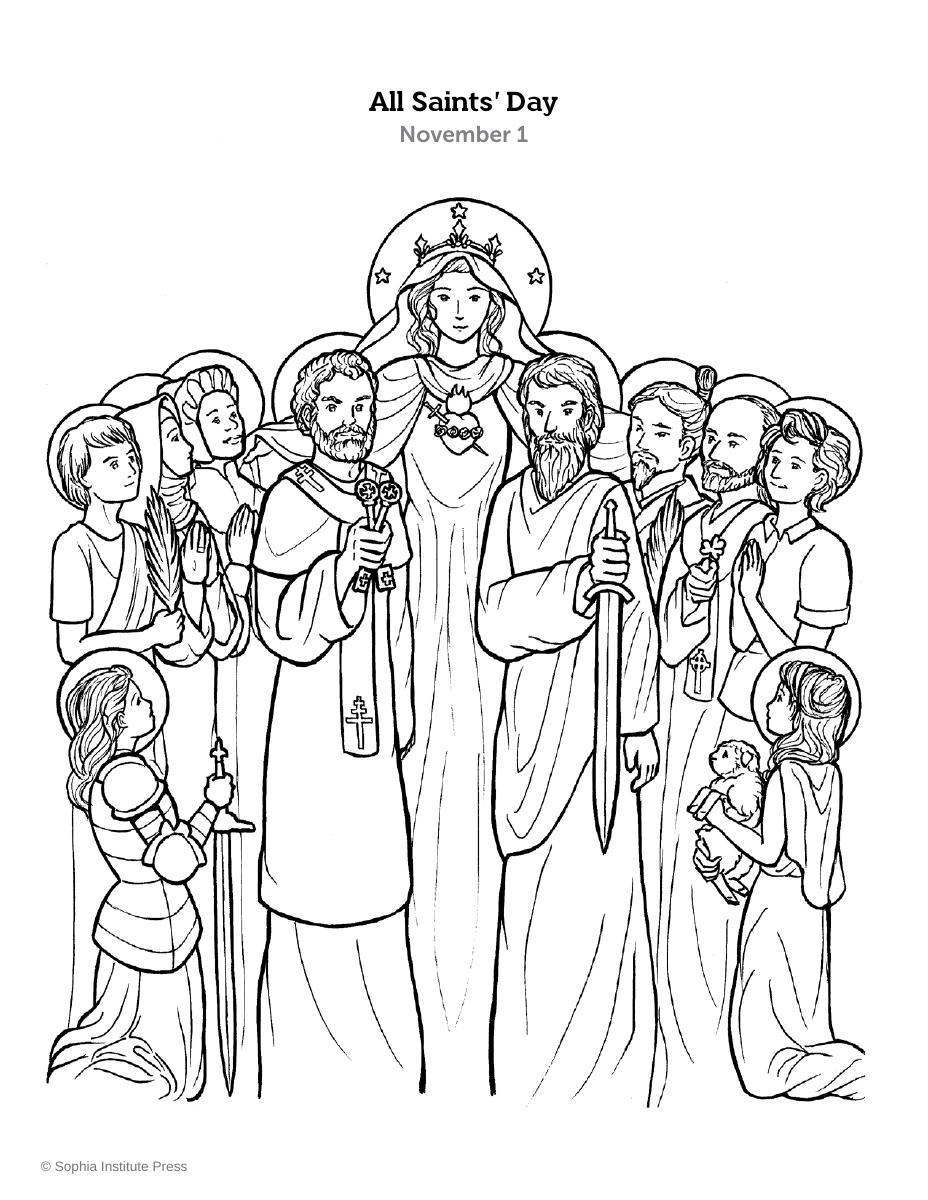
Color today’s saintPrintable20 min
Celebrate together
All Saints party: dress-up, the litany of our saints, and the Beatitudes at dinnerHands-on activity45 min
Small things for tonight
Word of the dayA minute or so1 min
This week’s memory verseLearn it together2 min
A child may askWith an answer for you2 min
Tonight’s family prayerFor the whole family1 min
Bedtime StoryRead aloud10 min
What to Notice at Today’s MassSomething to notice
For you, parent
A spiritual reflection for the parentFor you, parent10 min
Coming over the next two weeks
A look ahead
A few feasts, recipes, and traditions on the way. Notice what interests you now; choose only when the day arrives.
Tomorrow is All Souls’ Day. Plan a family visit to a Catholic cemetery any day from today through November 8; the Church grants a plenary indulgence for the souls in Purgatory for a cemetery visit with prayer for the dead, with Confession, Communion, a prayer for the Pope’s intentions, and a heart free of attachment to sin, even venial sin. Tomorrow’s email teaches the “Eternal rest” prayer; tonight, think of the names of family members who have died so the kids can write them down. Wednesday, November 4, is St. Charles Borromeo: find where your family catechism is.
The Beatitudes, the first words of the Sermon on the Mount: the Church reads them today as a portrait of the people who made it to Heaven.
About 3 min, read aloud
Matthew 5:1–12a
1 And seeing the multitudes, he went up into a mountain, and when he was set down, his disciples came unto him.
2 And opening his mouth he taught them, saying:
3 Blessed are the poor in spirit: for theirs is the kingdom of heaven.
4 Blessed are the meek: for they shall possess the land.
5 Blessed are they that mourn: for they shall be comforted.
6 Blessed are they that hunger and thirst after justice: for they shall have their fill.
7 Blessed are the merciful: for they shall obtain mercy.
8 Blessed are the clean of heart: they shall see God.
9 Blessed are the peacemakers: for they shall be called the children of God.
10 Blessed are they that suffer persecution for justice' sake: for theirs is the kingdom of heaven.
11 Blessed are ye when they shall revile you, and persecute you, and speak all that is evil against you, untruly, for my sake:
12 Be glad and rejoice for your reward is very great in heaven. For so they persecuted the prophets that were before you.
Jesus says the clean of heart will see God. Who gets to see God right now?
Answer
The saints. Everyone in Heaven sees God face to face, which is what today’s feast is about. A clean heart is one that loves God more than anything else; that is the one thing every saint has in common, whether they were a king, a nurse, or a kid.
Question 2 of 3 · ages 8–12
The Beatitudes say the poor, the sad, and the people who get picked on are “blessed.” That sounds backwards. What does Jesus mean?
Answer
He means the things the world calls winning (money, comfort, being popular) are not what get you to Heaven, and the things that look like losing can. Being poor in spirit means knowing you need God. Mourning means your heart is soft. Being persecuted for Jesus means you chose Him over being liked. Every saint we celebrate today lived at least one of these; it is the road they all took.
Question 3 of 3 · ages 8–12
Which one Beatitude could our family practice this week, and what would it look like?
Answer
Steer them to something concrete. “Merciful” looks like forgiving a sibling the first time they say sorry. “Peacemaker” looks like being the one who stops the argument instead of winning it. “Hunger for justice” looks like sharing the last of something without being asked. Pick one, name it, and check on it at Friday’s dinner.
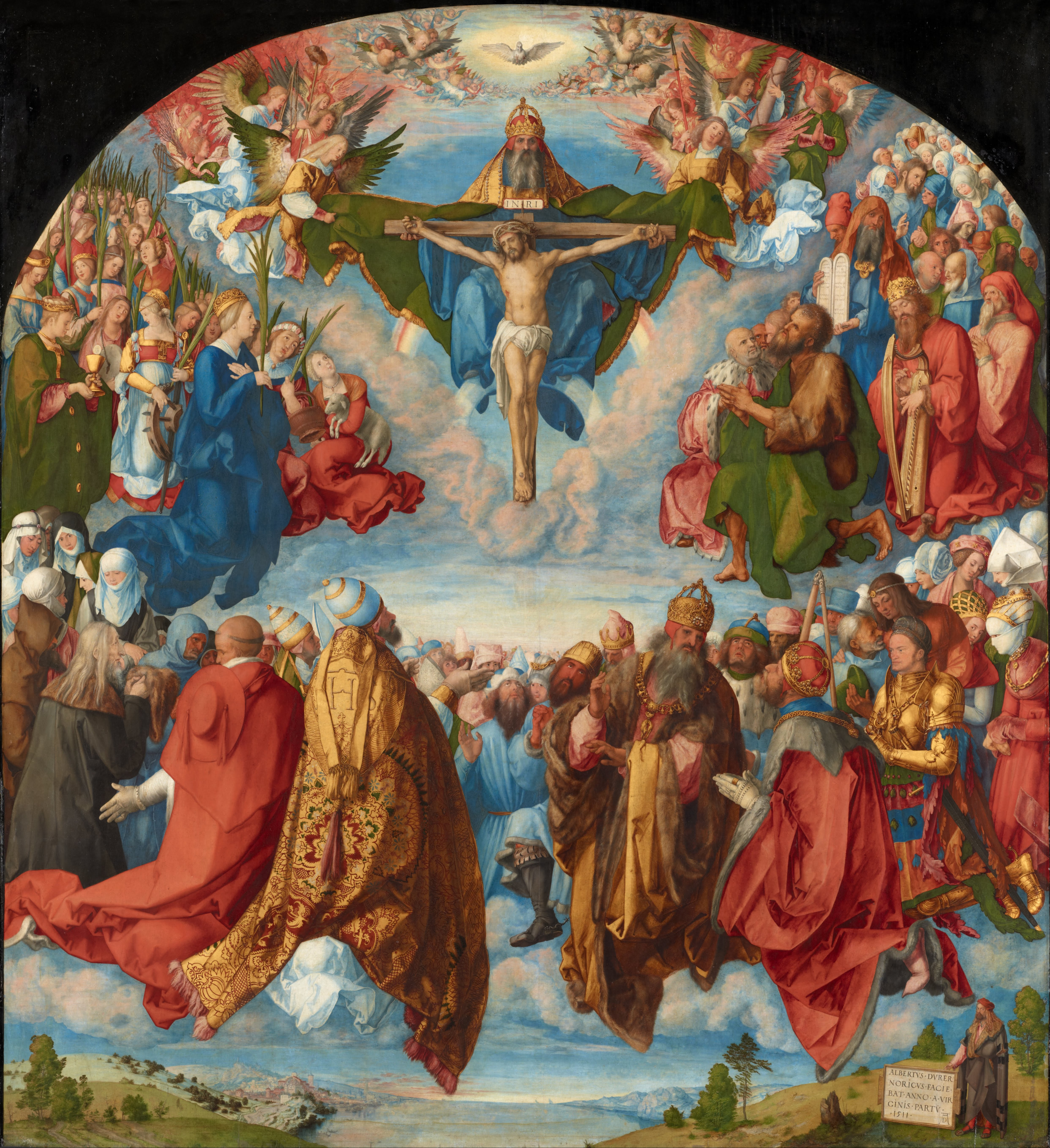
Everyone in Heaven is a saint, and today is the feast of all of them, including the ones nobody on earth ever heard of.
Picture a church so full that the crowd spills out the doors, and everyone inside is smiling. That is what today’s feast is: the one day a year the Church throws a party for every single person who ever made it to Heaven.
Some of them we know by name. St. Peter and St. Paul, who died in Rome. St. Patrick, who went back to the island where he had been a slave. St. Joan of Arc, a teenage girl who led an army. St. Josephine Bakhita, sold as a slave in Sudan, who became a nun in Italy. St. Gianna Molla, a doctor and mother. St. Pancras and St. Agnes, kids about your kids’ age, who died rather than deny Jesus.
But for every saint with a feast day there are countless others with no page in any book: grandmothers, farmers, soldiers, babies, people who did ordinary work well and loved God more than anything. That is why the Church keeps one day for all of them.
The feast is old. In 609, the Pantheon in Rome, once a temple to every pagan god, was rededicated to Mary and all the martyrs. Around 835, Pope Gregory IV asked that the whole West keep November 1 for all the saints. This year it falls on a Sunday, so the Sunday Mass is the feast.
What do all the saints have in common? Not their jobs, their countries, or their ages. Just this: they loved God more than anything else, and they let Him finish the work. They are our friends now, and they are waiting for us.
All you holy men and women, saints of God, pray for us!
No. You have to be in Heaven. The Church has officially named some saints so we can copy them and ask their prayers out loud, but most saints have no feast day and no statue. Today is their day too.
Question 2 of 2
Why does the Church put All Saints and All Souls right next to each other?
Answer
Because they are two halves of one truth. On November 1 we ask the people already in Heaven to pray for us. On November 2 we pray for the people still being made ready in Purgatory. The whole family of the Church, in Heaven, in Purgatory, and on earth, checks in on each other over these two days.
A crowd of saints gathered together, with Mary in the middle: apostles, a bishop, a soldier, nuns, mothers, and children. Give Mary a blue mantle, color each saint’s robe a different bright color, and leave the halos gold.
All Saints party: dress-up, the litany of our saints, and the Beatitudes at dinner
About 45 min
Ages 4–1545 min
What you need
Steps
After Mass, give each child until dinner to become a saint. Littles pick any saint they like (their name saint is easiest). Middles and teens should be ready to say two facts about theirs. A parent goes too; it matters that the kids see you do it.
Before dinner, write the family’s litany: every person’s baptismal saint and, for anyone confirmed, their confirmation saint, plus any saint the family loves. One name per line, each ending “pray for us.”
Light the candle and pray the litany aloud, one person leading, everyone answering “pray for us.” End with “All you holy men and women, saints of God, pray for us.”
During dinner, go around the table: each saint stands and introduces themselves in one or two sentences (“I am St. Cecilia, I sang to God while I was in trouble, and musicians ask me to pray for them”).
Read today’s Gospel, the Beatitudes, slowly. After each “Blessed are,” pause and ask: which of our saints tonight lived this one? Kids will surprise you.
Dessert: soul cakes or a “saint” cupcake each. Explain that soul cakes are an old custom from England: children went door to door on these days and got a cake in exchange for praying for the household’s dead. Tomorrow you pray for yours.
Short on time? The hectic-day version
At dinner have each person say their patron saint’s name followed by “pray for us,” then eat something sweet for the saints.
The whole family of God, joined together: the saints in Heaven, the souls in Purgatory, and all of us on earth, helping each other with prayer.
When we say “the Communion of Saints” in the Creed, we mean that Grandma in Heaven, the souls in Purgatory, and our family at this table are all one Church.
“Blessed are the clean of heart: they shall see God.”
Matthew 5:8
Say the verse once at the table tonight and let each child point to the saint at the table (in costume) who had a clean heart; every one of them did, which is the point.
Yes. That is the whole point of today. A saint is anyone in Heaven, and God made you to be there. You do not have to do anything famous. You have to love God more than anything, keep saying sorry when you fall, and let Him help you. The saints started exactly where you are, as kids at a table, and most of them stayed ordinary their whole lives. You are named after one; ask them to help you.
God our Father,
thank you for all the saints in Heaven,
the famous ones and the hidden ones.
They loved you more than anything.
Help us love you like that.
All you holy men and women, saints of God,
pray for us. Amen.
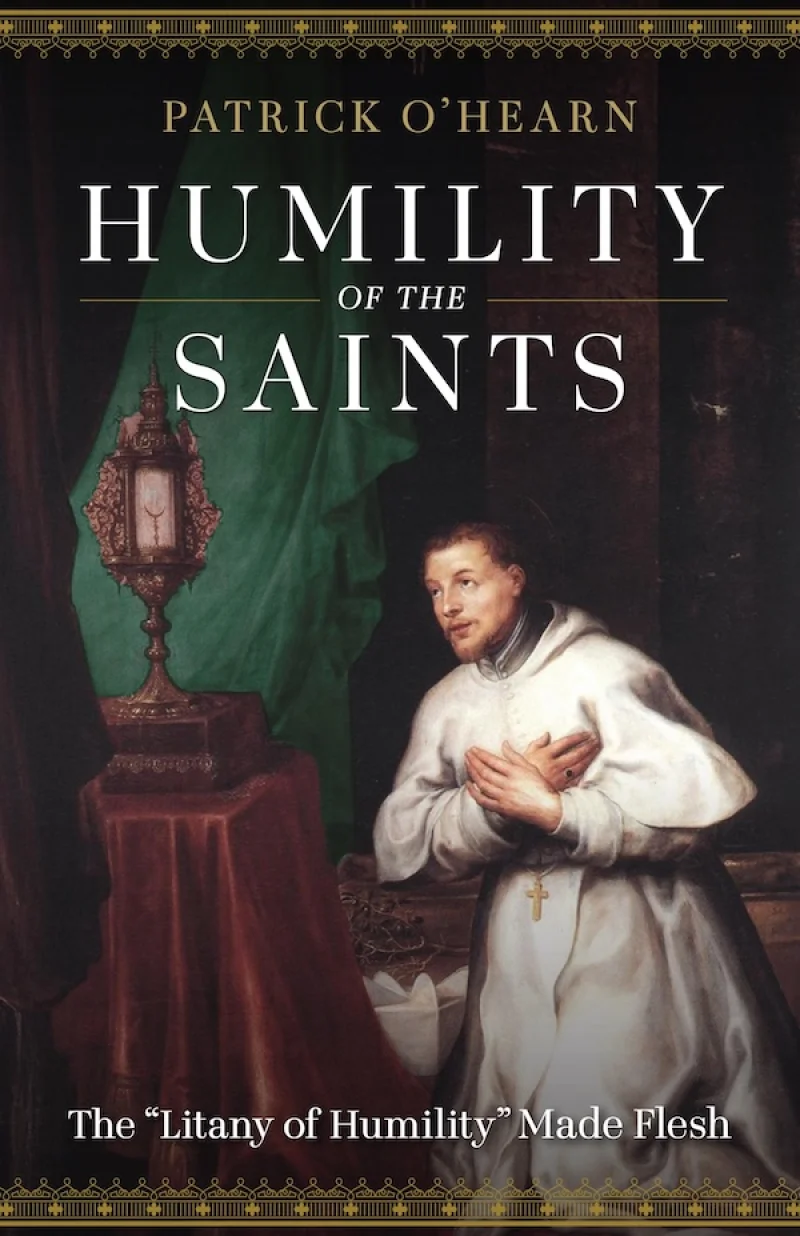
The book behind today’s readingHumility of the SaintsPatrick O'HearnSee the book
St. Francis of Assisi (1181–1226)
All Saints night, when each person names his own saint: here is the one almost every child already knows, and what he was really like.
In the countryside of Italy, St. Francis of Assisi would cry out, “Love is not loved!” lamenting that so few people loved God. The famous prayer called “The Prayer of St. Francis” (though it likely was not written by him, as it first appeared in 1912 in a small French spiritual magazine called La Clochette) also has a line that speaks to this truth. It asks God for the grace not to seek so much “to be loved, as to love.” Francis of Assisi was a man of humility, whose entire life was devoted to making God loved. He renounced everything, even his own earthly father and his inheritance, for his Heavenly Father’s love. He took to heart the admonition of St. John: “Do not love the world or the things in the world. If any one loves the world, love for the Father is not in him” (1 John 2:15). Francis did not set his heart on this passing world or seek to be loved by the world; rather, he wanted the world to love God. He was a mere compass pointing to the true north, Christ Himself.
If there is one saint who sought to live the gospel perfectly by imitating Christ in every way — poverty, humility, obedience, charity, and suffering — it was St. Francis. His biographer, the Franciscan friar St. Bonaventure, who was just four years old when Francis died, wrote about his holy founder: “The man of God was filled to overflowing with humility."
St. Bonaventure tells a story that testifies to Francis’s humility. One day, one of the friars was praying in a church alongside Francis, and he had a vision. He saw many thrones in Heaven, but one shone brighter than the rest with precious stones. He wondered whose throne this could be. Then the holy friar heard a voice: “This was the throne of one of the fallen angels, and now it is reserved for the humble Francis.” Later recalling the vision, the friar asked St. Francis about it. Francis replied, “I think myself to be the greatest of sinners.” He further declared, “If Christ had shown to the most wicked man on earth such mercy as He has shown to me, I believe assuredly that that man would have been far more grateful to God than I have been.” Because of Francis’s testimony, the friar came to believe in the vision, especially the truth of Jesus’ words that the humble shall be exalted.
Humility is truth. Francis showed by his actions that he really believed he was the least of all. Many pitied him and even thought he was mad, for humility appears like madness to the world. As St. Paul declared, “But God chose what is foolish in the world to shame the wise, God chose what is weak in the world to shame the strong” (1 Cor. 1:27). Francis was not insane; he was only following the gospel — literally. Yet in the world’s eyes, Francis was a failure. He did not have children, land, money, or titles. But in God’s eyes, he was one of the greatest saints, because he knew the truth about himself: He was a loved sinner, who sought to love God and neighbor above everything.
From "St. Francis of Assisi (1181–1226)" in Humility of the Saints, by Patrick O'Hearn (Sophia Institute Press), p. 45.
White vestments, not green, and the Gloria is sung. The first reading is from the Book of Revelation: listen for “a great multitude which no man could number” and the white robes. The Gospel is the Beatitudes; have the kids count how many times they hear “Blessed.” If your parish sings the Litany of the Saints, that long list of names with “pray for us” after each one is the whole Church calling the roll.
A longer reading for whenever the house grows quiet. Save it, print it, or leave it for another day.
About 10 min
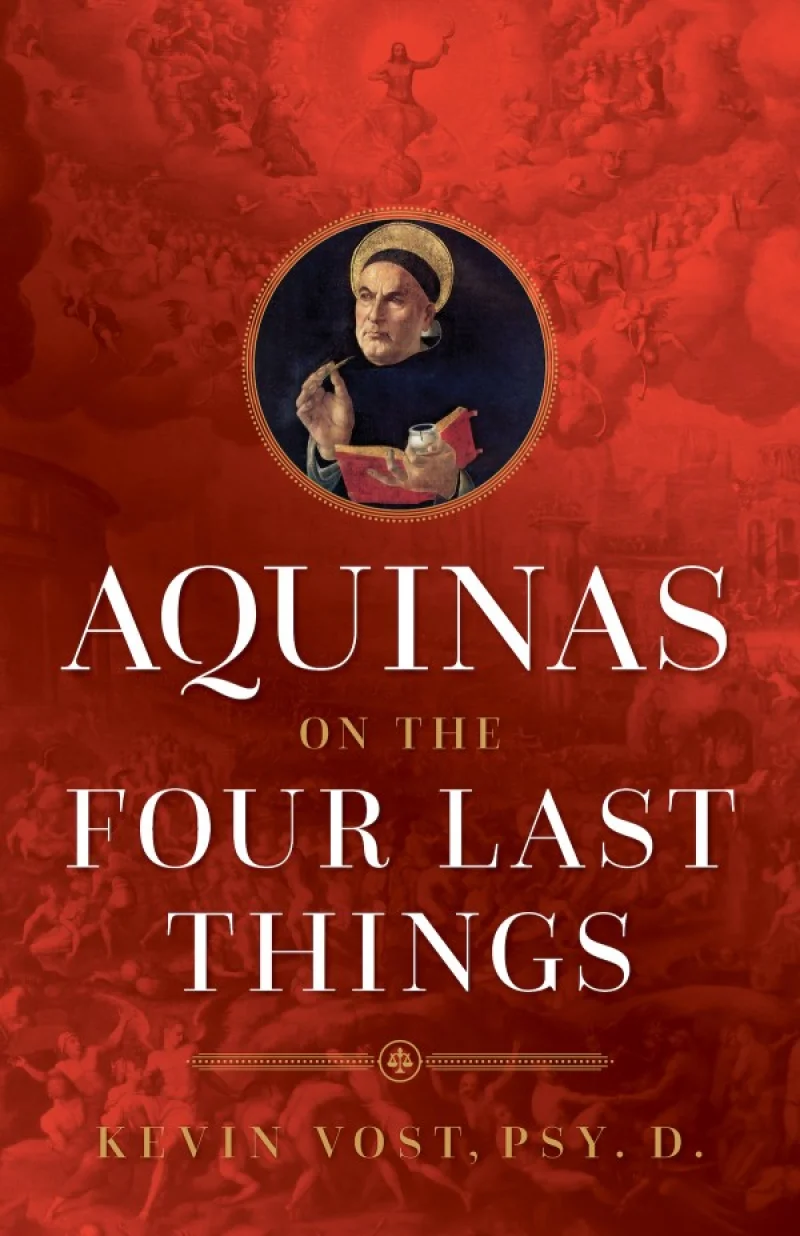
The book behind today’s readingAquinas on the Four Last ThingsKevin VostSee the book
7. Why We Should Pray to the Saints
On All Saints the Church asks the whole company of Heaven to pray for us; St. Thomas explains how the saints can hear a family at its own kitchen table.
Do the saints hear our prayers? Our Catechism states clearly that the saints who precede us into heaven serve as “a cloud of witnesses.” Further, “they contemplate God, praise him and constantly care for those whom they have left on earth” (2683). In the parable of the talents, Jesus told us that God’s faithful servants will be placed in charge over much when they enter into the joy of the Master (Matt. 25:21, 23). The prayers they offer up for us are part of their exalted service, and we should pray to them “to intercede for us and for the whole world” (CCC 2683). Of course, as we saw in chapter 2, separated souls lack bodily senses (to be restored at the Last Judgment). The saints have no ears, so how do they hear our prayers? Thomas explains that the saints in heaven see the divine essence, which is sufficient for knowing all things necessary. God, by beholding His own essence, knows all there is. No creature, including the saints and the highest angels, can completely comprehend God’s essence and thereby know everything, but each of the blessed does see in God’s essence “as many other things as the perfection of his happiness requires.” Part of the saints’ service to God is helping us attain our salvation, “for thus they become God’s co-operators, ‘than which nothing is more Godlike,’ as Dionysius declares.” Hence, they know not through senses, but through the Word of God, “the vows, devotions, and prayers of those who have recourse to their assistance.” Thomas also notes that while the saints know the woes and sufferings of their loved ones on earth, this does not produce grief in the saints, because they are so full of heavenly joy that they can know no sorrow whatsoever.
From "7. Why We Should Pray to the Saints" in Aquinas on the Four Last Things, by Kevin Vost (Sophia Institute Press), p. 71.
A few feasts, recipes, and traditions on the way. Notice what interests you now; choose only when the day arrives.
About 2 min
Tomorrow is All Souls’ Day. Plan a family visit to a Catholic cemetery any day from today through November 8; the Church grants a plenary indulgence for the souls in Purgatory for a cemetery visit with prayer for the dead, with Confession, Communion, a prayer for the Pope’s intentions, and a heart free of attachment to sin, even venial sin. Tomorrow’s email teaches the “Eternal rest” prayer; tonight, think of the names of family members who have died so the kids can write them down. Wednesday, November 4, is St. Charles Borromeo: find where your family catechism is.
We use cookies to improve your experience on our site. By using our site, you consent to cookies.
This website uses cookies
Websites store cookies to enhance functionality and personalise your experience. You can manage your preferences, but blocking some cookies may impact site performance and services.
Essential cookies enable basic functions and are necessary for the proper function of the website.
Name
Description
Duration
Cookie Preferences
This cookie is used to store the user's cookie consent preferences.
30 days
Google Tag Manager simplifies the management of marketing tags on your website without code changes.
Name
Description
Duration
cookiePreferences
Registers cookie preferences of a user
2 years
td
Registers statistical data on users' behaviour on the website. Used for internal analytics by the website operator.
session
Statistics cookies collect information anonymously. This information helps us understand how visitors use our website.
Google Analytics is a powerful tool that tracks and analyzes website traffic for informed marketing decisions.
ID used to identify users for 24 hours after last activity
24 hours
_gat
Used to monitor number of Google Analytics server requests when using Google Tag Manager
1 minute
_gac_
Contains information related to marketing campaigns of the user. These are shared with Google AdWords / Google Ads when the Google Ads and Google Analytics accounts are linked together.
90 days
__utma
ID used to identify users and sessions
2 years after last activity
__utmt
Used to monitor number of Google Analytics server requests
10 minutes
__utmb
Used to distinguish new sessions and visits. This cookie is set when the GA.js javascript library is loaded and there is no existing __utmb cookie. The cookie is updated every time data is sent to the Google Analytics server.
30 minutes after last activity
__utmc
Used only with old Urchin versions of Google Analytics and not with GA.js. Was used to distinguish between new sessions and visits at the end of a session.
End of session (browser)
__utmz
Contains information about the traffic source or campaign that directed user to the website. The cookie is set when the GA.js javascript is loaded and updated when data is sent to the Google Anaytics server
6 months after last activity
__utmv
Contains custom information set by the web developer via the _setCustomVar method in Google Analytics. This cookie is updated every time new data is sent to the Google Analytics server.
2 years after last activity
__utmx
Used to determine whether a user is included in an A / B or Multivariate test.
18 months
_ga
ID used to identify users
2 years
_gali
Used by Google Analytics to determine which links on a page are being clicked